Horse Racing Returns to Towcester: Point-to-Point and Schooling Plans
 Available in US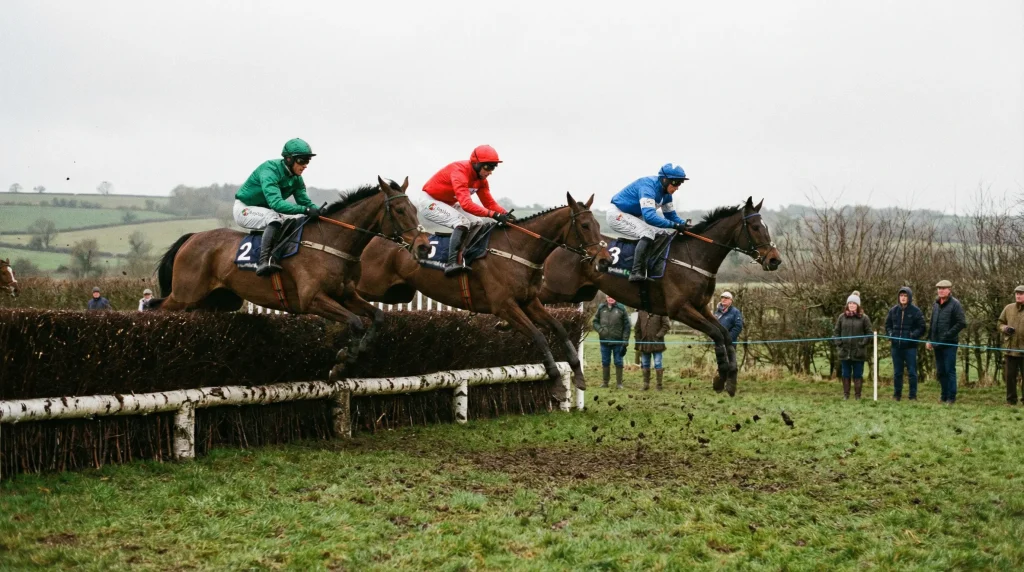
Orchestrate has announced plans to return horse racing to Towcester through schooling days and a premium point-to-point fixture, making the towcester horse racing return one of the most significant developments at the venue since the greyhound track was built. This page explains what has been announced, what it means for the greyhound programme, and how the dual-sport concept could reshape the venue’s identity.
The management behind the plan is Orchestrate.
What Orchestrate Has Announced: Schooling and Premium Point-to-Point
Schooling Days
The first phase of the return involves schooling days — sessions where racehorses can exercise over fences on the Towcester course under controlled conditions. Schooling is an essential part of National Hunt training: young horses need to learn how to jump, and experienced horses need to maintain their technique between competitive outings. Towcester’s course, with its undulating terrain and well-built fences, was always regarded as a good schooling venue, and its dormancy did not destroy the underlying infrastructure — the course is still there, the fences can be restored, and the drainage and going are manageable with maintenance.
Schooling days do not require a full racing licence or the logistical apparatus of a competitive fixture. They can be organised with relatively modest investment — a groundstaff team to prepare the course, a veterinary presence for safety, and an administrative structure to manage bookings. For Orchestrate, schooling days represent a low-risk entry point that generates revenue from the horse course without committing to the much larger investment required for licensed racing.
Premium Point-to-Point
The second phase is more ambitious: a premium point-to-point fixture. Point-to-point racing sits below the fully licensed National Hunt circuit but above informal schooling. It attracts amateur riders, purpose-bred point-to-point horses, and an audience that overlaps significantly with the mainstream National Hunt crowd. A premium point-to-point at Towcester would offer higher prize money and better facilities than a standard hunt fixture, positioning it as a destination event rather than a routine country meeting.
The precedent for dual-code venue operation already exists. Dunstall Park in Wolverhampton staged the first combined horse-and-greyhound day in British racing history on 7 March 2026, running seven horse races alongside 12 greyhound races on the same afternoon. That event demonstrated that the logistics of dual-code racing are manageable and that the combined product attracts a broader audience than either code does alone. Towcester’s plan is different in structure — point-to-point rather than licensed flat racing — but the underlying principle is the same: use the horse course to complement the greyhound programme rather than compete with it.
The Towcester course itself is well suited to point-to-point racing. The terrain — rolling Northamptonshire grassland with natural undulations and good drainage — produces the kind of ground that National Hunt horses thrive on. The fences, while requiring restoration after years of dormancy, were originally built to a high standard. And the site’s rural setting, with ample parking and a proper grandstand, gives it the infrastructure to host a point-to-point meeting that feels like an event rather than a field with a roped-off finishing straight. For Orchestrate, the investment required to bring the course back to point-to-point standard is a fraction of what a full National Hunt licence would demand.
What It Means for the Greyhound Programme
The most common concern among greyhound followers is that horse racing will divert management attention, investment and scheduling priority away from the dogs. It is a reasonable worry — the history of British sport is full of venues where one code was slowly marginalised in favour of another — but the structure of the Towcester plan suggests that the risk is manageable.
The greyhound programme is the commercial core of Towcester’s current operation. Five meetings a week, PGR broadcast coverage, a deep kennel roster, an industry-leading prize structure — all of these generate the revenue that funds the venue’s operations. Horse-racing schooling and a handful of point-to-point fixtures per year are supplementary income streams, not replacements. The greyhound schedule would not be reduced to make room for horses; the two codes would use different parts of the site and could, in principle, operate on the same day without conflicting.
There is also a potential benefit for the greyhound programme. A venue that hosts both codes attracts a wider audience, generates more media interest, and creates cross-selling opportunities — a horse-racing visitor who attends a point-to-point might return for a greyhound evening, and vice versa. The dual identity adds marketing value that a greyhound-only venue does not possess, and in a market where every track is competing for attention, that differentiation matters.
The risk would escalate only if Orchestrate pursued a full National Hunt licence and began staging licensed jump-racing fixtures that required significant capital investment and calendar priority. That step would change the economics of the venue fundamentally and could put the greyhound programme in a subordinate position. For now, the plans are for schooling and point-to-point, which are lower-scale, lower-cost activities that complement rather than threaten the existing greyhound operation.
Towcester as a Dual-Sport Destination
The towcester horse racing return is as much about identity as it is about revenue. Towcester Racecourse was built for horses. The grandstand, the paddock, the course itself — all predate the greyhound track by decades. Bringing horses back reconnects the venue with its heritage and positions it as something that no other greyhound stadium in Britain can claim to be: a genuine dual-code racecourse with a living history in both sports.
For visitors, the dual identity opens up a richer calendar. Instead of offering only greyhound meetings, Towcester can market itself as a year-round sporting venue with different events for different audiences and different seasons. Point-to-point fixtures typically run in the winter and early spring, which is also the greyhound season’s quietest period for big events — the Derby is in summer — creating a natural complementarity rather than a scheduling conflict.
Whether the dual-sport vision delivers on its promise will depend on execution — on whether the horse-course restoration is managed efficiently, whether the point-to-point fixtures attract strong entries and paying crowds, and whether the management team can run two codes without spreading itself too thin. The early signs are positive. Orchestrate’s 10-year lease provides the runway, Richard Thomas’s hospitality background provides the commercial expertise, and the Dunstall Park precedent provides proof that dual-code venues can work in modern British racing.
The wider context is set out in our Towcester greyhound results guide.
