
Greyhound Welfare in UK Racing: GBGB Injury and Retirement Data 2026
 Available in US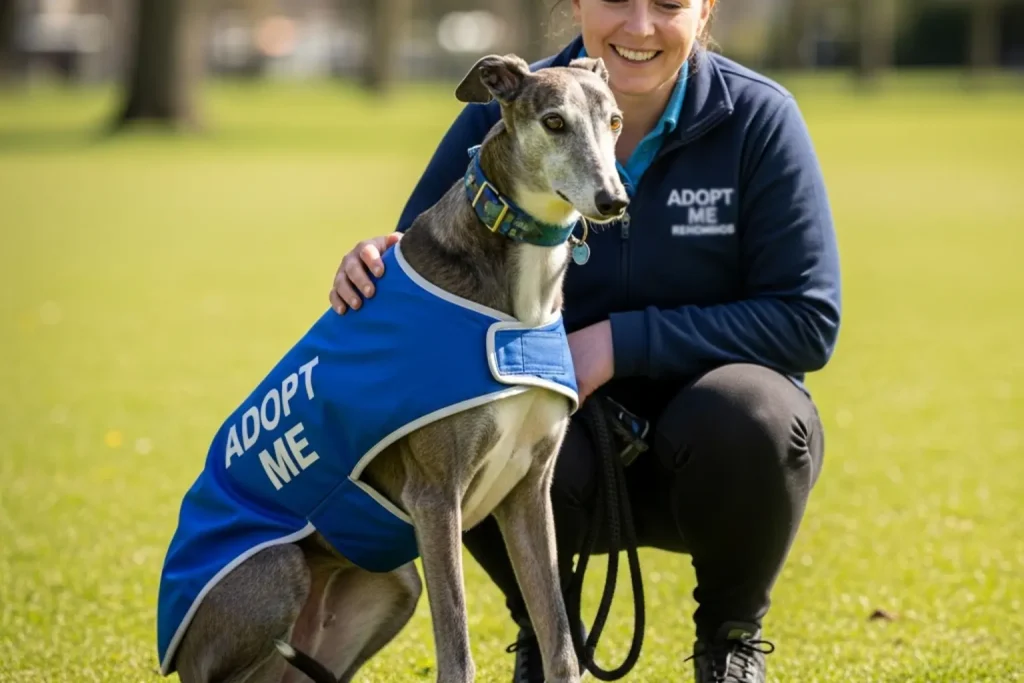
This page examines the key findings from the 2026 dataset, tracks the six-year trends, and explains the Injury Retirement Scheme that has become one of the most significant welfare interventions in the sport’s recent history.
Two nations are legislating: the Welsh ban.
Injury Rates, Fatality Rates and the Six-Year Trend
The 1.07% injury rate for 2026 is the lowest on record. To put that in context: for every 100 individual race runs, approximately one resulted in a recorded injury. The definition of injury used by GBGB covers any incident that requires veterinary attention at the track, from minor strains that see the dog return to racing within days to career-ending fractures. The breadth of the definition means the 1.07% figure captures the full spectrum of severity, not just the most serious cases.
Fatality Rate
The on-track fatality rate in 2026 fell to 0.03% — roughly one fatality per 3,300 runs. That represents a halving of the rate since 2020, when the figure stood at 0.06%. In absolute terms, the number of greyhounds that died on or immediately after racing at GBGB tracks in 2026 was in the low double digits, out of a population of several thousand active racing dogs. Every fatality is one too many from a welfare perspective, but the trend line shows that the measures introduced since 2018 — improved track standards, tighter veterinary protocols, better surface maintenance — are producing measurable results.
Economic Euthanasia
Perhaps the most dramatic improvement in the six-year dataset concerns economic euthanasia — the practice of putting a greyhound to sleep because the cost of treating an injury was deemed too high relative to the dog’s racing value. In 2018, the first year of published data, 175 greyhounds were euthanised for economic reasons. In 2026, that number was three. The 98% reduction is the result of a deliberate policy shift: GBGB’s board has stated publicly that putting a greyhound to sleep for financial reasons is unacceptable, and the introduction of the Injury Retirement Scheme provided the financial mechanism to make that position enforceable.
What the Trend Means
Six consecutive years of declining injury and fatality rates do not guarantee that the trend will continue indefinitely. Greyhound racing involves physical risk, and a floor will eventually be reached below which further improvement becomes progressively harder. But the trajectory since 2018 demonstrates that welfare outcomes in licensed racing are responsive to investment, regulation and cultural change within the industry. The gap between 2018 and 2026 is not a rounding error — it is a structural shift in how the sport manages the health of its animals, driven by data transparency, financial intervention and a governing body that chose to publish the numbers rather than hide them.
Track-level improvements have played a central role. Investments in surface quality — such as the 300-tonne sand overhaul at Towcester under Orchestrate — reflect an industry-wide recognition that safer running surfaces reduce injury frequency. Veterinary presence at meetings has been standardised, post-race checks have become more rigorous, and the regulatory framework around track maintenance has tightened. None of these changes alone accounts for the improvement; taken together, they form a system that did not exist in its current form before 2018.
The data also benefits from improved reporting. GBGB’s decision to publish detailed injury and retirement figures annually created accountability that incentivises tracks, trainers and officials to prioritise welfare in ways that are visible in the numbers. A track with an above-average injury rate knows that the figure will be published, examined and compared — and that knowledge shapes behaviour. Transparency, in this context, is not just a reporting exercise but a regulatory tool.
Rehoming and the Injury Retirement Scheme
In 2026, 94% of greyhounds that left racing — 5,795 dogs — were successfully rehomed or returned to their owners. That figure compares with 88% in 2018, the first year for which comparable data exists. The improvement represents hundreds of additional dogs each year finding homes rather than facing uncertain futures.
The Injury Retirement Scheme
The IRS was introduced in December 2018 as a direct response to the economic-euthanasia problem. The scheme provides funding for veterinary treatment of career-ending orthopaedic injuries — fractures and other conditions that would previously have resulted in the dog being put down because its owner or trainer could not afford the treatment. Since its launch, the IRS has paid out approximately £1.5 million in treatment costs, funding surgeries and rehabilitation that have allowed injured greyhounds to recover and be rehomed as pets.
The IRS is funded through a combination of GBGB contributions and industry levies, and its existence has changed the economic calculus around injured dogs. Before the scheme, an owner facing a £3,000 veterinary bill for a dog with no further racing value had a grim incentive to choose euthanasia. With the IRS covering a significant portion of treatment costs, that incentive is largely removed. The collapse in economic euthanasia from 175 cases to three is the most direct evidence of the scheme’s impact.
Mark Bird, CEO of GBGB, has spoken about the progress with evident satisfaction. Reflecting on the 2026 data in Greyhound News UK, he noted that the initiatives introduced in recent years were now embedded and helping to consolidate significant progress across all measures since 2018, adding that the board had been clear that economic euthanasia was unacceptable.
Where the Gaps Remain
The 94% rehoming rate means that 6% of dogs leaving racing — roughly 370 in 2026 — were not accounted for in the rehoming figures. Some of those dogs may have been returned to breeders, retained by owners as pets without going through formal homing channels, or — in a small number of cases — euthanised for medical reasons unrelated to economics. The Greyhound Trust and other homing charities continue to push for that percentage to rise, and the trend since 2018 suggests it will. But the gap between 94% and 100% is the territory where the hardest welfare challenges remain, and closing it will require sustained effort from the industry, the homing sector and regulators alike.
For anyone tracking greyhound welfare UK GBGB data over time, the 2026 release is the strongest evidence yet that licensed racing is capable of improving welfare outcomes when the will and the funding exist. Whether that progress is sufficient — and whether the pace of improvement meets public expectations — is a question that the industry and its critics will continue to debate.
The wider context is set out in our Towcester greyhound results guide.
